



Controllers
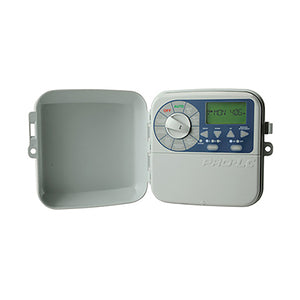
An irrigation controller is the brain of the system - it decides when each zone runs, for how long, and how often, whether that's on a simple weekly schedule or automatically adjusted for weather and soil conditions. Shop Wi-Fi enabled smart controllers for remote scheduling from a phone, or classic wired timers for a straightforward, no-app setup. Residential controllers handle a handful of zones around a single property; commercial controllers manage more stations across larger sites.
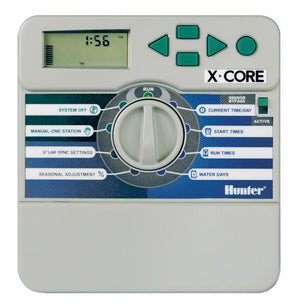
Controllers
Every automated irrigation system runs on a controller's schedule. It sends a signal to each zone's valve at the programmed time, keeps the valve open for the set duration, and moves to the next zone in sequence — which means the controller is the single point that determines whether a system waters efficiently or wastes water running zones too long, too often, or at the wrong time of day.
The core difference between controller types is scale and complexity, not just brand. Residential controllers are built for a handful of zones around a single property and typically range from simple wired timers with basic day/time programming to Wi-Fi-enabled smart controllers that adjust watering automatically based on local weather data — useful for cutting back on water during a rainy stretch without manually adjusting the schedule. Commercial controllers are built for larger sites with more zones, more programs running on different schedules, and in many cases centralized management across multiple properties from one dashboard.
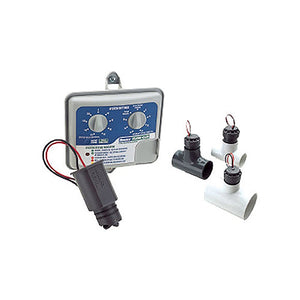
A controller only runs what it's connected to, which is where Sensors, Expansion, & Accessories come in — rain sensors that pause a cycle during active rainfall, soil moisture sensors that skip watering when the ground is already saturated, and station expansion modules that let a controller manage more zones than it shipped with. These additions turn a basic timer into a system that responds to actual conditions instead of running on a fixed schedule regardless of weather.
Controllers connect to Electric Valves to open and close each zone, so matching controller station count to the number of valves in a system is one of the first things to check before buying — a controller with too few stations can't run every zone, and one with far more than needed is paying for capacity that goes unused. The Learn HUB has guides for sizing a controller to a system and setting up weather-based scheduling.


