



Landscape Lighting Fixtures
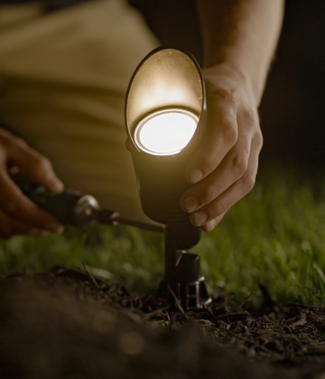
Lighting fixtures are the foundation of any outdoor lighting system - the housings and lenses that shape how light actually lands in your landscape. Path lights guide the way along walkways and borders; accent and up lights highlight trees and architectural features; patio and deck lights extend outdoor living after dark; spotlights and flood lights cover broader areas and improve security. Shop professional-grade brass and aluminum fixtures built for low-voltage systems, from durable housings to precise beam control.
Landscape Lighting Fixtures
Every outdoor lighting system is built from the same basic pieces working together: a transformer to step down voltage, wire to carry power to each fixture, and fixtures themselves to actually shape and direct the light. The fixture is what most people notice, but choosing the right type for each part of a landscape is what separates lighting that looks intentional from a yard with lights scattered wherever an outlet happened to reach.
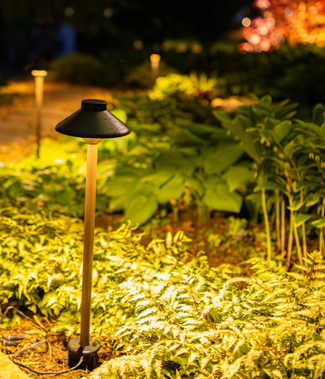
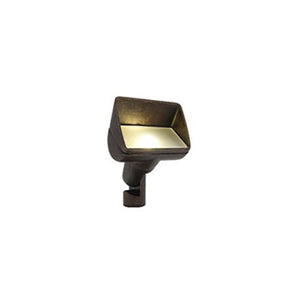
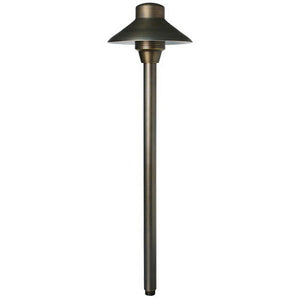
Path Lights mark walkways, driveways, and garden borders with downward-facing light that guides movement without creating glare — the most common starting point for a first lighting project since safety and navigation are usually the priority. Accent & Up Lights work in the opposite direction, aiming upward to highlight a tree canopy, a stone wall, or an architectural feature, turning a flat landscape into something with depth after dark. Patio & Deck Lights extend an outdoor living space into the evening — step lights, rail lights, and post cap lights that add both safety and ambiance to a space built for entertaining. Spotlights & Flood Lights cover more ground with a broader, higher-output beam, useful for security, large tree canopies, or architectural facades that need more light than an accent fixture alone can deliver.
Fixture material affects how long a system holds up outdoors. Brass resists corrosion and develops a natural patina over years of exposure, which is why it's the standard choice for higher-end, long-term installations. Aluminum costs less and still performs well, particularly in drier climates or for fixtures that aren't expected to stay in place for decades.
Every fixture in a low-voltage system needs to connect back to a properly sized Transformers and run on Wire rated for outdoor, buried use — and most fixtures use replaceable Lamps / Bulbs rather than being sold as sealed units, so a burned-out bulb doesn't mean replacing the whole fixture.
The Learn HUB has project guides for planning a full lighting layout, from choosing fixture types to sizing a transformer for the load.


