


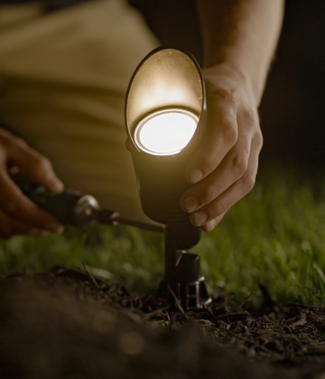
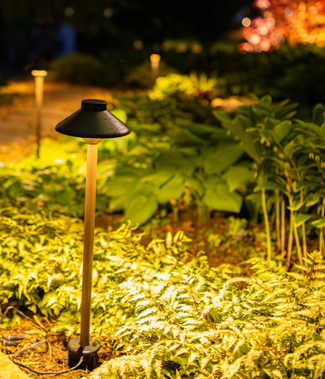

A landscape lighting system that looked perfect at install time can look unintentional or even broken a year later. The cause is usually not the lighting. It is the plants. Trees grow, shrubs fill in, ground covers spread and the light that hit a clear target last spring now hits the back of a hedge that has tripled in size. Reaiming the system is a one-evening project for most properties, and it restores the original design intent. Here is the workflow.
When to Reaim
Most residential systems benefit from a reaim check once a year. The best timing varies by climate:
- Spring (after first major growth flush): catches new-year growth before it becomes severe
- Late summer (after peak growth): handles full-season expansion
- Fall (after leaf drop on deciduous trees): exposes branch structure that may have shifted
Southern climates with year-round growth benefit from a check in both spring and fall. Northern climates with a single growth season usually need only one check.
Reaim also after any significant pruning, transplanting or landscape change. Removing a hedge or trimming a tree exposes new dark areas and fixture aim that no longer makes sense.
What You Are Looking For
Walk the property at night with the lights on. Look for:
- Fixtures pointing at the wrong target (a tree that has grown and the uplight now hits only the trunk, missing the canopy)
- Fixtures aiming into thin air (the original target has been removed or moved)
- Light hitting plants from the wrong angle (creating an unflattering shadow pattern)
- Glare from fixtures that grew exposed by surrounding plant changes
- Overspill into neighboring properties or onto streets
- Dark areas that should be lit (plants have grown over fixtures or blocked their throw)
Most properties have 3-7 fixtures that need attention in a typical annual reaim. A few will need significant repositioning; most need a small adjustment to the aim angle.
Tools for Reaiming
The job is mostly hand work:
- A flashlight (for daylight inspection)
- Knee pads (the most overlooked tool for landscape lighting work)
- A small adjustable wrench or screwdriver (depends on fixture mounting hardware)
- Replacement bulbs if you find any that have failed during the year
- A multimeter (optional, to spot-check voltage if any fixture seems dim)
For adjustments that require relocating a fixture (not just reaiming), add:
- A small spade or trowel
- Spare gel-filled wire connectors
A few feet of replacement 12 AWG wire (for any splice that needs to be redone)
The Daylight Survey
Walk the property in daylight first. For each fixture:
- Note the current aim direction
- Note the intended target
- Note any visible growth since installation
- Mark fixtures that need attention with a small piece of painter's tape on the fixture body
The daylight survey lets you plan the adjustments before nightfall. Trying to do diagnosis and adjustment in the dark is inefficient, and you miss problems that are obvious in daylight.
The Nighttime Adjustment
Return at full dark with the system on. Start with the fixtures you marked during the daylight survey.
For Spot Lights and Well Lights
Most spot lights and well lights have an adjustable head:
- A ball-joint or knuckle-joint that allows the fixture to pivot
- Locking ring or screw that holds the position
Procedure:
- Loosen the locking ring or screw
- Pivot the fixture head to the new aim
- Tighten the locking mechanism
- Step back and verify the new aim is what you wanted
If the new aim is not quite right, repeat. Small adjustments at the fixture often produce dramatically different light patterns at the target.
For Path Lights
Path lights usually have a fixed aim built into the hat or hood design. Adjustments are limited to:
- Rotating the entire fixture around its stake (changes which direction the hat faces)
- Tilting the stake itself if it has settled or shifted
For a path light that needs more dramatic repositioning, consider:
- Moving the fixture 6-12 inches to a different location
- Replacing with a different fixture style if the original is no longer right for the location
For Tree-Mounted Downlights
Downlights mounted in trees are particularly prone to needing reaim because the branch they are mounted to moves as the tree grows.
- Verify the mounting strap is not too tight (a growing branch can be girdled by a strap that was tight at install)
- Adjust the fixture aim by repositioning on the branch or rotating the fixture head
- Re-secure the mounting per the manufacturer's instructions
For downlights on rapidly growing trees, plan for a position check at least annually.
Working Around New Plant Growth
When plants have grown into the path of fixture light, three options:
Option 1: Move the Fixture
If the fixture's current location is now obstructed, move it to a better location. This usually involves:
- Pulling the fixture out of the ground
- Digging a new fixture location in the open
- Running additional wire if needed to reach the new location
- Splicing in extra wire with waterproof connectors
Fixture relocation takes 20-30 minutes per fixture but produces the cleanest result.
Option 2: Move the Plant
If the obstructing plant is small enough to transplant, moving the plant may be easier than moving the fixture. This is particularly true for:
- Small ornamentals that have grown into a fixture's beam
- Spreading ground covers that have crept across a fixture's lens
- Self-seeded plants that were not part of the original landscape plan
Spring or fall (cool, moist conditions) are the right times for plant relocation.
Option 3: Accept the New Composition
Sometimes a fixture that no longer serves its original purpose is positioned to do something else useful in the new landscape:
- An uplight that originally hit a young tree now lights a mature shrub instead (and that lighting effect works in the new composition)
- A path light blocked by overgrown perennials might be reaimed to act as an accent in the new bed
Reevaluate fixture purpose, not just position. Sometimes the right answer is to embrace the new role rather than fight to restore the old one.
Spot Issues During Reaim
While working on each fixture, also check:
- Lens cleanliness (wipe any debris off the front of well lights and uplights)
- Bulb function (replace any failed bulbs you find)
- Stake tightness (re-tension any fixture that has worked loose)
- Splice condition (if you can see the splice without digging, look for corrosion or moisture)
Reaim is a natural opportunity for low-effort preventive maintenance.
When Reaim Is Not Enough
If reaim does not restore the original design intent, two possibilities:
The System Needs a New Fixture
A fixture that no longer makes sense in any position is a candidate for removal or replacement. Pull the fixture and cap the lead wires for possible future use or relocate the fixture to a different part of the property where it serves a useful purpose.
The System Needs Expansion
New growth has created new lighting opportunities. A mature tree that was too small for uplighting five years ago may now be worth featuring. A path that has lengthened due to garden expansion may need additional path lights.
Note these opportunities during reaim. They become candidates for the next phase of work, scheduled at a time that fits the budget.
Documentation Update
After reaim, update the system documentation:
- Note any fixtures relocated or removed
- Note any new bulbs installed
- Note any plants moved or pruned
- Note any wire splices added
Keeping the documentation current makes the next year's reaim faster and reduces guesswork during any future service work.
Common Reaim Mistakes
Doing reaim only in daylight without verifying at night
- Tightening locking mechanisms before confirming the new aim
- Ignoring fixtures that have shifted slightly (small drift accumulates over years)
- Skipping reaim entirely until problems become severe
- Treating reaim as a fixture-by-fixture task without considering the overall composition
Next Step
Schedule the reaim. A 60-90 minute evening visit to the system once a year keeps the lighting performing the way it was designed to. Skip the reaim and the system gradually drifts from intentional to unintentional over a few years until major rework is required.


