



Matching the right fixture to each application and layering light intentionally produces better results than coverage for coverage's sake.
Landscape lighting is not a single product category, but rather a set of fixture types, each suited to a specific purpose. Understanding what each type does and where it belongs is the foundation for designing a system that performs consistently and looks right from every angle.
Path Lights
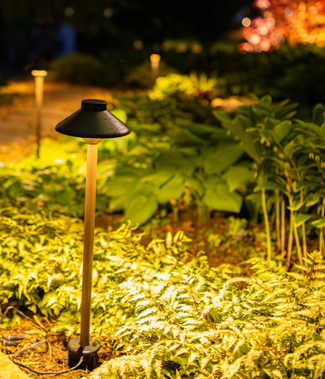
Path lights mark walkways, planting bed edges and low-lying areas. They serve safety and ambient functions simultaneously, defining where the ground changes and creating a lit environment that feels welcoming rather than procedural. Spacing is based on the fixture's illuminated radius at grade; the light from one head should reach the base of the next.
Spotlights and Flood Lights
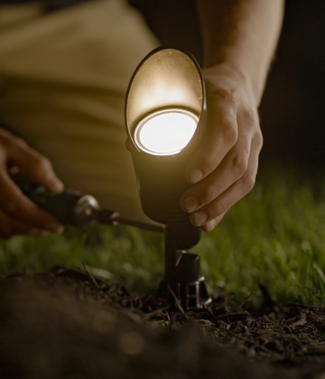
Spotlights and flood lights direct concentrated beams at specific targets: specimen trees, architectural features, garden focal points and building facades. Adjustable fixtures allow precise aim during installation. These fixtures create the focal points that make a lighting system read as designed rather than scattered.
Step, Deck, and Hardscape Lights
Step lights and hardscape-integrated fixtures are built into surfaces — stair risers, retaining walls, patio edges and columns. They provide functional illumination at grade level without introducing above-ground fixtures into the sight line. Deck and patio lights handle ambient lighting for outdoor living areas and extend the usable hours of those spaces.
Well Lights
In-ground well lights project upward from flush-mount housings. They are used where above-ground fixtures are impractical — under tree canopies, in paved areas or in zones with heavy foot traffic. They are also used to create up-lighting effects that highlight vertical elements without visible hardware during daylight.
Design Principles That Matter
Layer light across multiple height levels and fixture types rather than applying uniform illumination across a space. Combining path lights at grade, accent lights on plantings and focal lights on architecture creates depth that flat, even lighting cannot.
Prioritize contrast over brightness. A few well-placed fixtures with clear intent outperform a large number of undirected lights. Consider the view from inside the house. A system that reads well from both interior spaces and the street delivers more value.
Transformer sizing and circuit loading must account for total fixture wattage with a buffer for additions. Verify voltage at each fixture after installation — voltage drop on longer runs produces dim fixtures at the far end of the circuit.


