

Landscape Lighting Installation Tools: What You Need Before You Start
Low voltage landscape lighting requires a specific set of tools that differ from general landscaping equipment. The list is short and the investment is modest — but having the right tool for each step affects the quality and longevity of the finished installation.
- Wire Stripper. A quality wire stripper should be durable enough for daily field use. Self-adjusting models that automatically match the tool to the wire gauge diameter reduce the chance of nicking the conductor inside the insulation — a common source of connection failure and corrosion over time.
- Crimp Tool. After stripping, wires are combined and compressed to form a secure, low-resistance connection. The crimp tool applies controlled force to the connector body, locking the wires in place. An undersized or poorly executed crimp is a slow failure that shows up months or years later as flickering or dead fixtures.
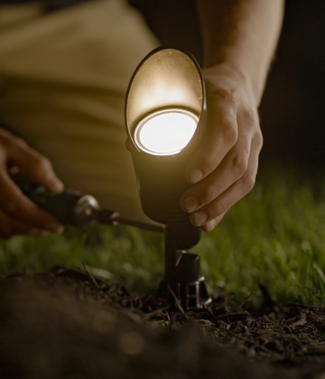
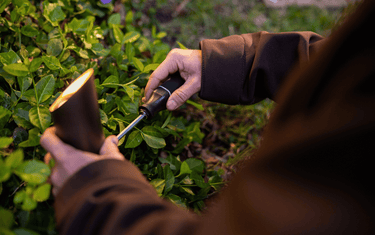
- 6-in-1 Screwdriver. Nearly every fixture, transformer terminal and junction box in a low voltage lighting system uses a standard screw head. A multi-tip screwdriver keeps you moving without trips back to the truck.
- Silicone-Filled Wire Connectors. The most field-reliable connector option for direct-burial low voltage wire. The assembly has two components: a cap that mechanically combines and compresses the stripped wire ends, and a silicone gel-filled housing that seals over the cap. The gel fills the air space around the connection, blocking moisture intrusion.
- 12-Gauge Low Voltage Landscape Wire. Determine run length by measuring the distance from the transformer to the furthest fixture on each circuit, then add approximately 3 feet per fixture for adjustment slack. Use 12-gauge wire for most residential runs.
- Voltmeter. A voltmeter confirms that each fixture is receiving voltage within the manufacturer's specified range: 9 to 15 volts for LED fixtures, 10 to 12 volts for halogen. The voltmeter is also the primary diagnostic tool when fixtures fail.
- Wire and Edging Trencher. A flat spade or dedicated wire trencher cuts a narrow slot 6 to 8 inches deep for burying the supply wire. Burying the wire below the typical depth of cultivation keeps it clear of edging tools, aeration equipment, and shallow excavation.
Additional Considerations
On jobs where the wire run crosses an established bed edge or passes under a hardscape surface, running the wire through buried PVC conduit in those segments provides additional protection and makes future wire pulls easier.
For larger projects, a line voltage multimeter and a wire-pulling fish tape are useful additions to the kit.


