
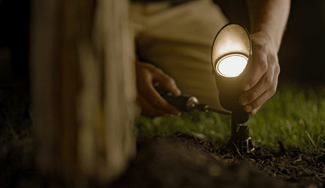

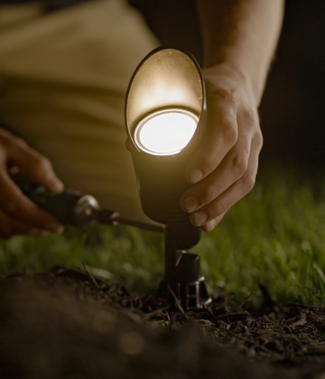
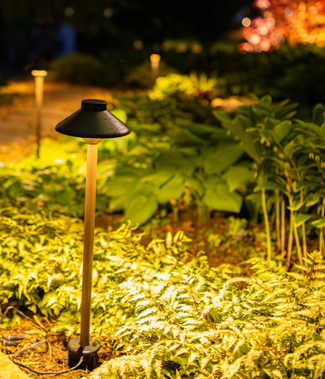
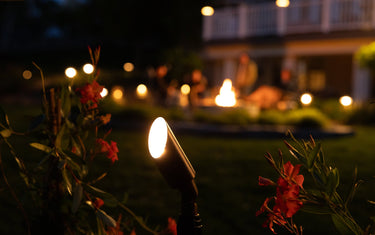
Outdoor lighting extends the usable hours of a landscape investment across every season. Here is what makes it a practical addition rather than a finishing detail.
Landscape lighting is often treated as an optional upgrade, something considered at the end of a project after the primary work is complete. The practical case for it runs in the other direction. Lighting addresses safety, security and outdoor usability in ways that no other landscape element does, and it does so year-round regardless of season.
Safety After Dark
Steps, grade changes, path edges and low plantings are navigated safely in daylight and easily missed in low light. A well-placed lighting system makes these hazards visible and predictable after dark — for residents, guests and anyone using the property in the evening. Motion sensors, timers, and always-on circuits in critical zones ensure the relevant areas are lit when the space is in use without requiring active management.
Security
Consistent exterior illumination removes the low-visibility conditions that make a property easier to approach unobserved. This does not require a monitoring subscription or ongoing service fee. Once installed and configured, the system operates reliably without active management. For homeowners who already use monitored security systems, exterior lighting addresses the same underlying concern through a different and complementary mechanism.
Year-Round Use of the Outdoor Space
In northern climates, evening darkness arrives early from late summer through spring. Without lighting, the hours between dusk and bedtime are largely inaccessible for outdoor use — which in many markets is a majority of evening hours for six or more months of the year.
Lighting extends that window. A patio, garden area or outdoor seating space that is visible and comfortable after dark gets used more. The landscape investment made in building and planting it returns more value over time when it is accessible in the dark.
Seasonal Consistency
Unlike irrigation or planting work, landscape lighting is not subject to seasonal installation constraints. Low voltage systems do not require ground preparation, are not affected by frost during installation, and are not tied to a growing season. The system functions the same in December as it does in July — which means it provides value across months when the outdoor space would otherwise be unused after dark.


