




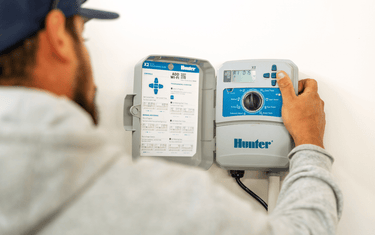
Wi-Fi Irrigation Controllers: Benefits, Features & Upgrade Guide
Irrigation technology has moved well past the dial timer on the garage wall. Today's Wi-Fi-enabled controllers let you monitor, adjust and troubleshoot a system from a phone or tablet — whether you're standing in the yard or sitting at a desk.
An estimated 20 million or more U.S. homes have in-ground irrigation systems. The majority were installed with controllers that predate smart technology. If your system still runs on a fixed schedule, it is likely wasting water and missing the efficiency features that current technology makes straightforward to access.
What Smart Controllers Do Differently
Standard controllers run on a fixed schedule. Smart controllers adjust that schedule based on real conditions. The most meaningful advantages fall into three categories:
- Precise Programming. Remote access through a mobile app or web browser lets the user update schedules, activate zones and review run times without walking to the controller. Multiple programs, start times and zone-level customization are standard on most current models.
- Weather-Based Watering. Many smart controllers pull data from local weather stations or use onboard sensors to automatically pause or reduce watering after rain or when soil moisture is adequate. The EPA estimates that properly programmed smart controllers can reduce outdoor water use by as much as 50 percent compared with time-based systems.
- Flow Monitoring and Alerts. Some models include flow sensors that detect anomalies — a broken head, a stuck valve or a damaged lateral line — and push an alert before the problem becomes a flooded yard or an inflated water bill.
When an Upgrade Makes Sense
Any controller without weather responsiveness, remote access or flow monitoring is a reasonable upgrade candidate. Payback time varies by region, usage pattern and current water rates. In areas with tiered water pricing or mandatory conservation schedules, the math tends to move faster.
Installation
A smart controller replaces an existing controller using the same field wiring in most cases. The interface is designed to be intuitive — comparable to setting up a home thermostat. Most manufacturers provide detailed setup guides, and the app-based programming is designed for everyday use without technical background.
Retrofit Wi-Fi modules exist for some controller platforms but are not universally compatible. In most cases, upgrading to smart functionality requires replacing the controller itself — verify compatibility with your existing system before purchasing.


