




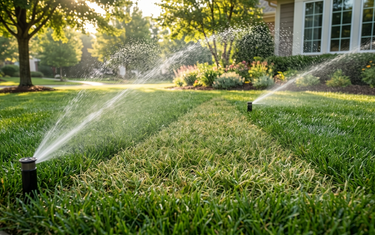
Most irrigation callbacks trace back to a small set of avoidable errors made during design or installation. Here is what to watch for.
A well-installed irrigation system runs efficiently, covers the landscape consistently, and requires minimal intervention between seasons. Most of the things that prevent that outcome happen at the design and installation stage — not in the equipment itself. The following are the ten most common errors and the straightforward steps that prevent each one.
1. Designing Without Site Data
A system designed without accounting for soil type, plant water requirements, sun exposure and slope will not perform well regardless of equipment quality. Every site has a unique combination of these factors. Use the site assessment to drive the design, not a standard template.
Zone by water need: group plants with similar requirements together. Mixing turf, established trees and newly planted annuals in a single zone guarantees that something is being over- or under-watered.
2. Skipping Pressure and Flow Measurement
System design built on assumed pressure and flow numbers is system design built on guesswork. Measure both at the point of connection before specifying any equipment. Actual field measurements frequently differ from what municipal records or rule-of-thumb estimates suggest, and those differences change which equipment is appropriate.
3. Incorrect Head Spacing
Head-to-head coverage is the standard: the spray radius from one head should reach the adjacent head. Gaps create dry zones. Excessive overlap wastes water and creates waterlogged areas. Follow the manufacturer's spacing specifications for the specific nozzle and operating pressure and mark placements with flags before trenching.
4. Using the Same Schedule for Sun and Shade
Shaded areas require significantly less water than full-sun areas. Running all zones on the same schedule leads to saturated soil and root rot in shaded beds while leaving sunny turf areas dry. Set schedules individually by zone based on actual exposure. Drip irrigation in shaded planting beds is more appropriate than overhead spray in most situations.
5. Missing or Incorrect Backflow Prevention
Backflow prevention is a code requirement in most jurisdictions and a health safeguard on every system. The type of device required depends on local regulations and the hazard classification of the installation. Verify requirements before installation, not after. Installing the wrong device type, or installing it incorrectly, creates both a code violation and a potential contamination risk.
6. Not Testing Before Signing Off
A final system test is not optional. Run every zone through a full cycle, observe coverage, check for misaligned heads, look for leaks at all fittings and connections and confirm that pressure is consistent across the zone. Problems found during the test cost minutes to fix. The same problems found after the customer calls back cost significantly more.
7. Ignoring Future Plant Growth
Plants installed at one foot will eventually be three feet. Shrubs grow into spray patterns. Canopy expands across rotor arcs. Designing only for current conditions means the system will need adjustment, or will stop working correctly, as the landscape matures. Anticipate growth in head placement and specify heads that allow for arc and radius adjustment.
8. Insufficient Pipe Depth
Pipe installed too close to the surface is vulnerable to damage from aeration equipment, edging tools and mower scalping on unlevel turf. Lateral lines should be installed at the industry-standard 12-inch depth. In high-traffic areas and under hardscape crossings, use protective sleeves. The cost of a sleeve is negligible compared to a pipe repair.
9. Incorrect Controller Programming
The controller is the system's operating logic. Programming that does not reflect zone-specific needs wastes water at best and damages plants at worst. Take the time to program each zone correctly at startup. If the system uses a smart or Wi-Fi-enabled controller, confirm that the weather data integration is active and the scheduling baseline is appropriate for the site.
10. Leaving Without a Homeowner Walkthrough
The homeowner is responsible for the system once you leave. A brief walkthrough covering how to operate the controller, what normal operation looks like, how to recognize a problem, and when to adjust seasonal schedules gives them the foundation to maintain what you installed. Without it, the system is more likely to be run incorrectly, problems will go unnoticed longer and the call-back rate goes up.


